Emerging Scientists
All emerging scientists were recommended by colleagues in the field, are within 10 years from their first publication, and have published outstanding works in past years. We are excited that these rising stars present their latest results at our conference.
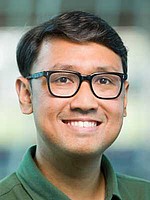
Ralm Ricarte (FAMU-FSU Tallahassee, USA)
Dr. Ralm G. Ricarte is an Assistant Professor at the Florida A&M University-Florida State University College of Engineering. He earned a BS in Chemical Engineering from The University of Texas at Austin (Advisor: Benny D. Freeman), and a PhD in Chemical Engineering from the University of Minnesota (Advisors: Timothy P. Lodge and Marc A. Hillmyer). After his doctorate, he served as a Marie Curie and PRESTIGE Postdoctoral Fellow at ESPCI Paris in the lab of Ludwik Leibler.
His laboratory investigates the influence of molecular structure on dynamic polymer networks, with a specific focus on vitrimers and polymerization-induced self assembly. To study these complex systems, his laboratory employs a combination of synthesis, characterization, and theoretical modeling techniques.
Dr. Ricarte has earned several honors throughout his career, including the NSF CAREER Award, 3M Non-Tenured Faculty Award, and Florida State University Honors Thesis Mentor Award.
At our conference, Dr. Ricarte talks about the "Network Topology and Blend Properties of Polybutadiene Vitrimers".
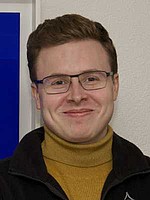
David Beyer (University of Stuttgart, Germany)
Dr. David Beyer earned his B.S (Advisor: Paolo Margaretti), M.S., and PhD in physics at the University of Stuttgart (Advisor: Christian Holm). During his PhD, he was awarded a Fulbright PhD scholarship for conducting research in the lab of Zhen-Gang Wang at the California Institute of Technology in Pasadena. Since February 2026, he is a postdoctoral researcher in the lab of Helmut Grubmüller at the Max Planck Institute for Multidisciplinary Sciences in Göttingen.
David's work covers weak (pH-reponsive) polyelectrolytes, polyelectrolyte hydrogels and brushes, charged colloids, intrinsically disordered proteins, and polyelectrolyte complexation and coacervation. In his research, he uses a range of theoretical techniques, including coarse-grained and atomistic simulations, Poisson-Boltzmann theory, variational methods, and Polymer Field Theory and SCFT.
Dr. Beyer has received multiple awards, including a Fulbright PhD Scholarship and the prize of the Dr. Artur Fischer Foundation in the Category Physics and Chemistry.
At our conference, Dr. Beyer talks about the results of his PhD that he finished recently.
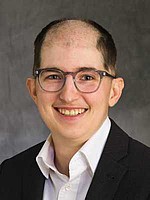
Alexa S. Kuenstler (Univ. Illinois, USA)
Dr. Alexa S Kuenstler is an Assistant Professor in Chemical and Biomolecular Engineering at the University of Illinois Urbana-Champaign. Alexa earned an B.S. in Biomedical Engineering at University of Rochesteran and a Ph.D. in Polymer Science and Engineering from the University of Massachusetts Amherst (Advisor: Ryan Hayward). Afterwards, she joined the group of Prof. Chris Bowman at the University of Colorado Boulder with an Arnold O. Beckman Postdoctoral Fellowship in Chemical Sciences.
Alexa's research lies at the interface of materials chemistry, polymer physics, and additive manufacturing to address needs in energy, sustainability, and human health. Her expertise covers photochemical and photothermal methods to control shape morphing in polymer constructs, membrane gas separation, dynamic covalent chemistry, and self-assembly in polymer materials.
Dr. Kuenstler has earned several honors throughout her career, including the Arnold O. Beckman Postdoctoral Fellowship in Chemical Sciences, Lincoln Excellence for Assist. Prof. Scholar from the University of Illinois Urbana-Champaign, and she was selected by the University of Chicago as one of the ‘Rising Stars in Soft and Biological Matter’.
At our conference, Dr. Kuenstler talks about "Resolving the Effects of Chemistry and Polymer Network Structure on the Viscoelasticity of Dynamic Covalent Networks".
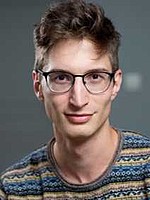
Max Hohenschutz (RWTH Aachen University, Germany)
Dr. Max Hohenschutz is a group leader at the Institute of Physical Chemistry at RWTH Aachen University. He obtained his Bachelor’s and Master’s degrees in Chemistry from the University of Regensburg under the supervision of Werner Kunz, and completed his PhD at the University of Montpellier with Olivier Diat and Pierre Bauduin.
His research lies at the interface of physical, inorganic, and supramolecular chemistry, with a particular focus on the self-assembly of small molecules—especially nanometric ions—with polymers in aqueous environments to create novel functional soft materials.
He has received several distinctions throughout his career, including the Doctoral Thesis Award of the University of Montpellier and the Theodore van Kármán Fellowship from RWTH Aachen University.
At our conference, Dr. Hohenschutz will present his work entitled “Polyoxometalates as Smart Crosslinkers in Cellulose Ether Solutions."
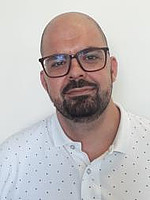
Adrià Roig Gibert (Ghent University, Belgium)
Dr. Adrià Roig Gibert is a Postdoctoral Researcher in the Polymer Chemistry Research Group led by Prof. Filip Du Prez at Ghent University (Belgium). He obtained his Master’s degree in Synthesis, Catalysis and Molecular Design at Universitat Rovira i Virgili and a Ph.D. in Chemistry (Advisors: Prof. Àngels Serra and Prof. Silvia De la Flor) at the same university.
Dr. Roig Gibert's research interests cover covalent adaptable networks, dual-curing strategies, click chemistry, and biobased feedstocks. He is currently focusing on redesigning polyethylene for chemical recycling and upcycling, as well as on the development of covalent adaptable networks for high-performance applications.
Dr. Roig Gibert was awarded the Adhesive Innovation Award by FEICA and EURADH and received the award for the second-best doctoral thesis in polymers in Spain from the Grupo Especializado de Polímeros (GEP-RSEQ).
At our conference, Dr. Roig Gibert summarizes his latest discoveries in the field.
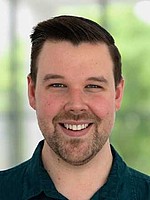
Hayden Robertson (TU Darmstadt, Germany)
Dr. Hayden Robertson is a postdoctoral researcher at the Institute for Condensed Matter Physics (Group of Regine v. Klitzing) at the TU Darmstadt, Germany. After a B.S. in Maths and Chemistry at the University of Newcastle in Callaghan, Australia, he earned his Ph.D. at the same institute (Advisors: Prof Erica Wanless and Prof Grant Webber) before moving to his current position in Germany.
Dr. Robertson's research focuses on the synthesis and physicochemical characterisation of responsive polymer systems, such as polymer brushes and microgels, which are analyzed by a broad range of experimental techniques including ellipsometry, AFM, as well as neutron and X-ray scattering. Beyond experimental work, he is also involved in developing open-source software tools designed for the complex data analysis of these interfacial systems.
Dr. Robertson has earned several honors throughout his career, including a Humboldt Research Fellowship, the ACIS Best PhD Thesis Award from the Australasian Colloid and Interface Society, and the AINSE Scholar Gold Medal from the Australian Institute of Nuclear Science and Engineering.
At our conference, Dr. Robertson talks about his latest work in the von Klitzing group.
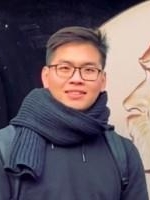
Loc Nguyen (Ghent University, Belgium)
Loc Nguyen is a PhD fellow in the Department of Organic and Macromolecular Chemistry, Faculty of Science at Ghent University (Belgium) in the Group of Professor Filip Du Prez.
His research focuses on the development of covalent adaptable networks, with particular emphasis on aza Michael- and amide-based dynamic covalent chemistry to address the intrinsic non-recyclability of conventional thermosets.
At our conference, Loc Nguyen talks about "Aryl Amides for The Design of Covalent Adaptable Networks".
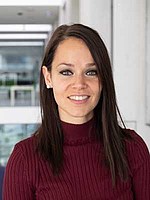
Celine Calvino (University of Freiburg, Germany)
Dr. Céline Calvino is a Junior Research Group Leader and Principal Investigator in the Cluster of Excellence Living, Adaptive and Energy-autonomous Materials Systems (livMatS) at the University of Freiburg, Germany. She earned a BSc, MSc, and PhD in Chemistry from the University of Fribourg, completing her doctoral research at the Adolphe Merkle Institute under the supervision of Christoph Weder. After her PhD, she carried out postdoctoral research at the Pritzker School of Molecular Engineering, University of Chicago, in the group of Stuart J. Rowan, supported by an SNSF Mobility Fellowship.
Her research designs orthogonal stimuli-responsive chemistries that make polymer connectivity reversible, enabling sustainable polymer materials through reprocessing, repair, and recycling by design.
Her work has been recognized with several distinctions, including European Polymer Federation (EPF) Future Faculty and Researchers Award (2025), the ACS PMSE Future Faculty Scholar Award (2020), and the Chorafas Prize for Excellence in Scientific Research (2019), among others.
At PNG2026, she will present “Quinolinone-Gated Chemistry: A Versatile Platform for Recyclable and Stimuli-Responsive Polymers.”
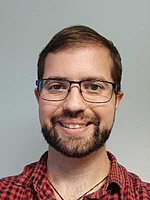
Pablo M. Blanco (University of Lleida, Spain)
Dr. Pablo M. Blanco is a Beatriu de Pinós postdoctoral researcher at the University of Lleida (Spain). He obtained his BSc in Chemistry and his PhD in Theoretical and Computational Chemistry from the University of Barcelona (Advisors: Sergio Madurga and Josep L. Garcés). After his doctorate, he moved to the group of Dr. Peter Košovan at Charles University (Czech Republic) and worked as a Marie Skłodowska-Curie postdoctoral fellow in the group of Prof. Rita S. Dias at the NTNU in Trondheim, Norway.
Dr. Blanco is a computational physical chemist who combines coarse-grained Monte Carlo and molecular dynamics techniques to uncover the molecular mechanisms governing charge regulation, macromolecular crowding, and nanoparticle transport. His research addresses applications ranging from ultrasound-mediated drug delivery to environmental macromolecular chemistry. He also contributes actively to scientific software development and leads the development of the Python-based Molecule Builder for ESPResSo (pyMBE), an open-source toolbox for building coarse-grained models in molecular simulations.
Dr. Blanco has been awarded two highly competitive postdoctoral fellowships (Marie Skłodowska-Curie and Beatriu de Pinós).
At the conference, Dr. Blanco will present his recent work on ultrasound-assisted nanoparticle diffusion in hydrogels.
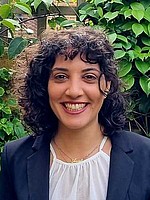
Anna Constantinou (University of Oxford, UK)
Dr. Anna Constantinou is a postdoctoral research associate and subgroup leader at the University of Oxford (UofO) in Prof Dame Molly M. Stevens group. She has previously worked as a postdoctoral researcher and an EPSRC doctoral prize fellow at Imperial College London (ICL). She completed her doctorate (D.Phil.) in polymer chemistry (Advisor: Prof Theoni K. Georgiou), following her M.Sc. studies at the ICL. She studied chemistry at the University of Cyprus (UCY) and undertook her final year project under the supervision of Prof Costas S. Patrickios.
Dr. Constantinou's research interests lie in the fabrication and physicochemical characterisation of polymers, polymeric networks, and self-assembled nanostructures, for applications in the biomedical field and formulation industry. In the Stevens group, she is exploring innovative biomaterials for antimicrobial therapies, tissue replacement and drug delivery, with special focus on bioengineering platforms for minimally invasive therapies.
Among other distinctions, Dr. Constantinou received the James S Walker Award from the IOM3, the President’s Award for Excellence in Education from the ICL, and the McLean Medal Award from the ICL Department of Materials.
At the meeting, Anna Constantinou will talk about "Ultrasound-Triggered Gelation for Spinal Disc Repair".
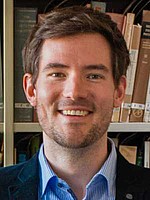
Andreas Klingler (IVW Kaiserslautern, Germany)
Dr. Andreas Klingler is a postdoctoral researcher at the Leibniz-Institute for Composite Materials (IVW) in Kaiserslautern, Germany. He conducted his diploma thesis work in the Nanomaterials Research Group at the University of Toronto (Prof. Uwe Erb) and graduated at the Technical University in Kaiserslautern in materials engineering. Dr. Klingler earned his PhD (Advisors: Prof. Ulf Breuer and Prof. Klaus Friedrich) at the same university. Afterwards, he started focusing on dynamic polymer networks within a DFG-funded Walter-Benjamin position.
Andreas' research interests span from polymer engineering to polymer physics, with a special focus on dynamic polymer networks and other stimuli-responsive polymers.
At our conference, Dr. Klingler talks about "Transition phenomena in vitrimers".