Conference School
Conference School: Advanced Characterization (June 25-26)
Chair: Michael Lang (Leibniz-Institute of Polymer Research, Dresden, Germany)
The school is designed for post-docs and outstanding Ph.D. students that wish to extend their toolbox in the characterization of networks and gels. Note that the school is not covered by the conference ticket and a separate ticket has to be purchased in the IPF shop.

Structure of Branched Molecules and Gels.
Michael Lang (Leibniz-Institute of Polymer Research, Dresden)
My talk provides a brief introduction into mean field gelation and the scaling model of gelation. Afterwards, the mean field model is generalized regarding the formation of the smallest loop structures inside a network and structural differences between reversible and irreversible systems will be discussed. Finally, I will cover how local composition variations may impact the network structure and how these deviations from mean field can be estimated or analyzed in computer simulations.
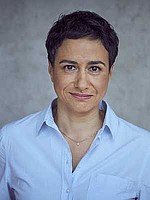
Advanced characterization of highly branched and cross-linked polymers: from sub 10 nm to ultra high molecular weight macromolecules
Albena Lederer (Stellenbosch University, Matieland, South Africa & Leibniz-Institute of Polymer Research, Dresden, Germany)
My talk provides an overview of the fundamental challenges associated with the analysis of highly branched and cross-linked polymer architectures. I will discuss why broadly distributed molecular weights, complex topologies, and ultra-high molecular weight fractions limit the applicability of conventional characterization methods. Subsequently, I will show how advanced separation techniques in combination with scattering methods can be used to access structural information across length scales ranging from the sub-10 nm regime up to µm-scale. Finally, I will focus on how scattering experiments can be employed to elucidate polymer architecture and scaling behavior, highlighting the connection between global conformational properties and local, segment-scale structure in highly branched and network-like macromolecules.

Network Disassembly Spectrometry
Jeremiah A. Johnson (Massachusetts Institute of Technology, USA)
My talk will introduce the fundamentals of Network Disassembly Spectrometry (NDS) as an experimental framework for directly quantifying network topology in polymer networks. I will begin by outlining the basic principles of NDS and its variants, which allows for quantification of loops and dangling ends in polymer networks. Building on this foundation, I will introduce time-dependent NDS, which exploits the kinetics of disassembly to access additional topological information, including how dangling ends and loop populations change throughout the course of polymer network deconstruction. Throughout the talk, I will walk the audience through the experimental workflow using concrete examples, illustrating how these methods transform disassembly data into quantitative, model-independent measurements of network defects and connectivity.

Flourescence Recovery After Photobleaching (FRAP)
Sebastian Seiffert (Johannes Gutenberg University Mainz, Germany)
This turotial talk introduced fluorescence photobleaching as a powerful tool to quantify diffusive dynamics of probes in polymer networks, with the ability to determine diffusion coefficients, diffusion dimensions, and the distribution of both in polydisperse cases.
Rubber Elasticity and Advanced Characterization by Computer Simulations
Michael Lang (Leibniz-Institute of Polymer Research, Dresden)
In the first part of this talk, I will introduce basic concepts for understanding rubber elasticity. Afterwards, I focus on computer simulations and different ways to address specific contributions to rubber elasticity. Finally, I will sketch which information can be extracted from scattering data of rather homogeneous networks.

Basic Rheological Approaches for Networks
Dimitris Vlassopoulos (FORTH Heraklion, Greece)
After introducing the basic concepts of rheology, we shall focus on techniques and methodologies adapted to the study of physical or chemical or dual networks. Approaches to obtain an extended linear viscoelastic spectrum will be discussed along with the distinct signatures of different types of networks. Elements of the nonlinear rheological response, both in shear and extension, will be presented, with particular focus on the selection of appropriate protocols to obtain material properties. A link to basic principles of polymer physics, as well as to structural features of the networks will be made.

Analyzing Rubber Elasticity: Experimental Possibilities and Challenges
Sven Wießner (Leibniz-Institute of Polymer Research, Dresden, Germany)
I present some of the experimental possibilities and challenges when attempting to characterize local and global deformations in technical elastomers as well as in hydrogels. It is shown how a combination of mechanical experiments with techniques as X-ray Scattering or insitu-µCT delivers information (and often confirmation) about structural changes (e.g. strain induced crystallization & melting upon strain release; cavitation under constraint deformation conditions).

Advanced NMR Characterization of Elastomers and Gels
Kay Saalwächter (Martin-Luther-Universität Halle-Wittenberg, Halle, Germany)
NMR spectroscopy offers a powerful set of techniques for probing structural and dynamic properties of polymer systems at the monomer level. In the study of elastomers and polymer networks, proton low-resolution multiple-quantum (MQ) NMR—using cost-effective low-field instruments—has become a widely used method to characterize crosslink density, inhomogeneities, defect structures, and entanglement effects in bulk elastomers and gels. My contribution aims to first provide a fundamental understanding of the relevant polymer physics and spectroscopic principles underlying the technique, and second, to present application examples that highlight correlations with macroscopic properties such as swelling and modulus.